A conservatoire founded in 1794, heir to the Enlightenment and Revolution
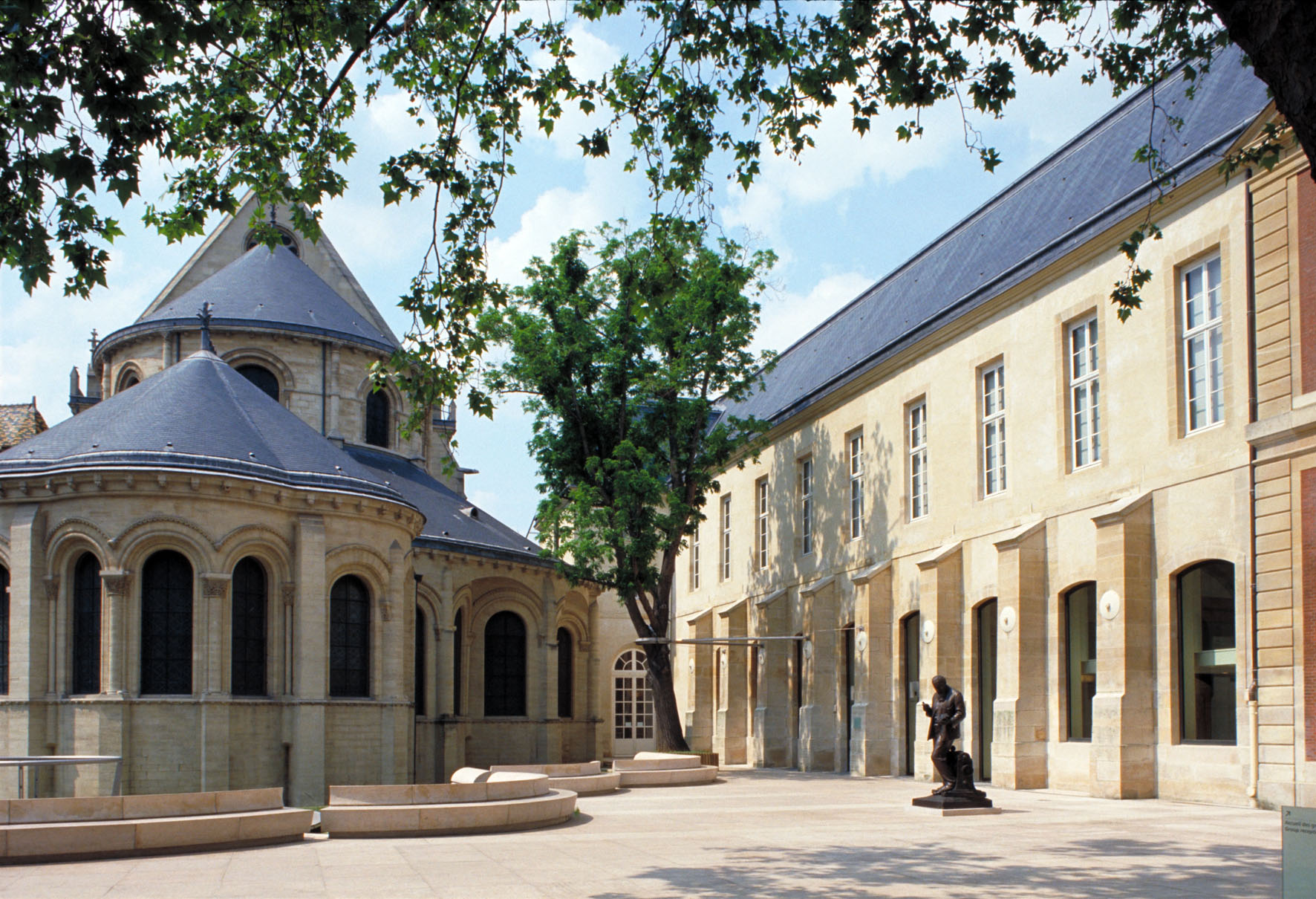
The Musée des Arts et Métiers showcases the heritage of the Conservatoire national des arts et métiers (Cnam), founded in 1794 by Abbé Henri Grégoire to “improve national industry” by collecting, preserving and passing on technical knowledge. Conceived from the outset as a place of learning through objects, the conservatoire brought together instruments, machines and models to train craftspeople, engineers and inventors. The museum’s establishment in the former Saint-Martin-des-Champs priory in Paris’s third arrondissement in the early nineteenth century gave this mission a distinctive architectural setting, where medieval monastic history meets the epic of the Industrial Revolution. The institution and its collection, enriched by gifts, purchases and deposits, opened to the public early on, affirming that the history of technology forms part of national heritage.
Administratively, the museum remains part of Cnam, a public higher education and research institution supervised by the Ministry of Higher Education and Research. This relationship explains the close connection between conservation, exhibitions and scientific education, as well as the storage facilities and restoration workshops associated with research programmes. From the nineteenth century, leading inventors and industrialists found a place to present their innovations here, making the museum a centre for the circulation of technical ideas.
A medieval priory renewed through contemporary museum design
The museum occupies the former Cluniac priory of Saint-Martin-des-Champs, whose Romanesque and Gothic church and convent buildings form the framework of the visitor route. The church, begun in the twelfth century and modified into the modern era, is a spectacular space displaying major milestones in the history of transport and mechanics. Listed as a historic monument, the architectural complex has undergone restoration and development campaigns to adapt it to the conservation and display needs of the collections.
At the end of the twentieth century, a major renovation completed in 2000 modernised the displays and improved circulation. The reopening in 2000 clarified the organisation into seven thematic areas while highlighting distinctive spaces such as the church nave, where the dramatic display of major pieces uses the height of the building and natural light. The museum entrance at 60 rue Réaumur, in the third arrondissement, leads to galleries that present the collections in an educational way and bring medieval architecture into dialogue with contemporary exhibition design.
World-class collections arranged in seven fields
The Musée des Arts et Métiers holds approximately 80,000 objects and 15,000 drawings, of which around 2,500 objects are on public display. Comprising original devices, models and prototypes, the collections are divided into seven fields: scientific instruments, materials, construction, communication, energy, mechanics and transport. Their scale and diversity make them a reference for anyone interested in the history of inventions, the evolution of processes and the spread of technology.
In the scientific instruments section, visitors discover the material tools of measurement, observation and calculation. Physics and astronomy instruments, optical devices and early mechanical calculators bear witness to the rationalisation of science. The celebrated Pascalines, arithmetic machines designed by Blaise Pascal in the seventeenth century to add and subtract, represent an early chapter in the automation of calculation. The displays also show how instrumental precision helped establish the standards governing modern metrology.
The energy and mechanics section illustrates the engines of the Industrial Revolution. Steam engines, regulators, electric motors and transmission devices trace the evolution of energy sources and ways of converting them. Zénobe Gramme’s dynamo, invented in the 1860s and 1870s, illustrates the decisive move towards generating electricity on a scale usable by industry. Energy regulation and conversion devices are presented in relation to their use in workshops, factories and transport.
Transport occupies spectacular spaces, notably in the former church. Milestones include Nicolas-Joseph Cugnot’s 1769 fardier, a heavy steam-powered carriage often considered one of the first attempts at an automobile. Flying machines suspended above the nave tell the story of early experiments in flight: Clément Ader’s Avion III, built in 1897 with its characteristic bat-like silhouette, and Louis Blériot’s Blériot XI, the type of aircraft with which he made the first flight across the English Channel in 1909. Among the museum’s most photographed pieces, they illustrate the role of French pioneers in early aviation.
The communication section displays machines and media that shaped the spread of information, from printing to telecommunications. Chappe optical telegraphs, printing presses, phonographs, telephones and radios give material form to shared time and a world brought closer by signals. The objects themselves show the transition from analogue messages to electrical and then electronic signals, telling the story of the industrialisation of the press, the growth of networks and the technical standardisation of communication.
Construction and materials bring together architectural models, structural systems, processes and substances, from metal alloys to polymers. The museum holds many nineteenth-century teaching models used to demonstrate structures, bridges and frameworks. Built with great precision, they reveal principles of material strength and assembly, recalling Cnam’s original educational role, when handling and observing models were central to learning.
Science in motion: Foucault’s pendulum and the Earth’s rotation
Among the museum’s emblematic devices, Foucault’s pendulum occupies a special place. Léon Foucault demonstrated the Earth’s rotation at the Panthéon in 1851 with a monumental pendulum. The experiment has since been reproduced elsewhere, and the museum presents a pendulum installation in the church of Saint-Martin-des-Champs. Beyond the spectacle of an oscillation that appears unchanging, the pendulum reminds us that instruments can make invisible phenomena visible and ground knowledge in experimental evidence. Its presence in a medieval monument almost theatrically places modern science within a long historical perspective.
Education, documentation and research: a museum-school
True to its founding mission, the Musée des Arts et Métiers emphasises scientific education and access to knowledge through objects. Guided visits and workshops address contemporary issues through historical artefacts, whether concerning energy, mobility, information or materials. The presentation favours a documentary approach: detailed labels, multimedia, demonstrations and thematic routes bring technical facts into dialogue with contexts of use and inventors’ biographies. The museum also develops educational programmes for schools and universities, extending the educational dimension of its parent institution, Cnam.
Documentation and conservation rely on off-site storage and specialist workshops where objects are inventoried, restored and studied. Climate control, material stabilisation and digitisation meet contemporary preventive conservation standards. Many pieces can be consulted through online databases and catalogues, supporting research and the preparation of exhibitions in France and abroad. The museum regularly lends works to other institutions, contributing to the international circulation of technical heritage.
Parisian roots and international reach
Located at 60 rue Réaumur in Paris’s third arrondissement, the museum benefits from a dense urban setting and strong heritage visibility. It attracts a varied public, from enthusiasts of the history of science to visitors curious about concrete examples of innovation. Its displays combine spectacular large exhibits and educational cases, meeting varied expectations: contemplation of unique objects and understanding of technical processes. The institution takes part in national events such as European Heritage Days and Museum Night, reinforcing its role in sharing culture and science.
The Musée des Arts et Métiers reaches beyond France through collaborations with technical, scientific and industrial art museums in Europe and elsewhere. Its collections, covering several centuries of innovation, are sought for thematic temporary exhibitions on energy, communication, mobility and industrialisation. In turn, the institution hosts exhibitions placing its holdings in the context of contemporary issues such as obsolescence, the energy transition and the digitisation of skills, always drawing on carefully documented objects and archives.
Living heritage for understanding the present
The Musée des Arts et Métiers stands out through the rare combination of a major heritage site, the former Saint-Martin-des-Champs priory, and the educational ambition of a conservatoire of technology. The history of its collections, enriched by such emblematic pieces as Cugnot’s fardier, Ader’s Avion III, the Blériot XI and Foucault’s pendulum, forms part of a continuous educational tradition in which the object is not only a witness but a tool for knowledge. By presenting seven major technical fields and relating them to the social, economic and scientific context of their emergence, the museum provides a rigorous framework for understanding how innovations arise, spread and transform lives.
This factual and documentary foundation, strengthened by active education, makes the Musée des Arts et Métiers a distinctive institution among French museums. Neither an art museum nor simply a museum of applied science, it is a living memory of technology, encyclopaedic and tangible. At a time of accelerating technological change, this heritage helps us appreciate continuities and turning points by examining the machines, instruments and models that shaped two centuries of industrialisation and engineering.
Sources
Musée des Arts et Métiers, official website: institution, collections, thematic routes, practical information and featured works. https://www.arts-et-metiers.net/
Cnam, Conservatoire national des arts et métiers: founding history in 1794, teaching and research missions and institutional ties to the museum. https://www.cnam.fr/
Musée des Arts et Métiers, Cugnot’s fardier: entry on the 1769 steam carriage attributed to Nicolas-Joseph Cugnot. https://www.arts-et-metiers.net/musee/fardier-de-cugnot
Musée des Arts et Métiers, Clément Ader’s Avion III: the aircraft built in 1897 and its context. https://www.arts-et-metiers.net/musee/avion-iii-de-clement-ader
Musée des Arts et Métiers, Blériot XI: the aircraft associated with the first flight across the English Channel in 1909. https://www.arts-et-metiers.net/musee/bleriot-xi
Musée des Arts et Métiers, Foucault’s pendulum: the 1851 experiment and the installation in the church of Saint-Martin-des-Champs. https://www.arts-et-metiers.net/musee/pendule-de-foucault
French Ministry of Culture Mérimée database, Saint-Martin-des-Champs priory: historic-monument listing, church and convent buildings. https://www.pop.culture.gouv.fr/